A Victorian greenhouse is a beautiful thing. It looks elegant. It grows amazing plants. But it needs a little love each year. Do not worry. You do not need to be a builder or a gardener with years of training. Just follow this simple list. Once per year, check these 12 points. Your greenhouse will stay warm, dry, and happy. Let us get started.
1. Look at the glass panels closely
Glass is the main part of any Victorian greenhouse. Walk around the outside first. Check each pane. Is any glass cracked? Is any piece loose? Small cracks can grow fast. Wind and rain make them worse. A cracked pane is replaced quickly. Do not leave it for later. Also look from the inside. Sometimes a crack is only visible from one side. This job takes twenty minutes. It saves bigger repairs.
2. Clean the gutters and downpipes
Leaves and dirt block gutters. A blocked gutter overflows. Water then runs down the glass or the wooden frame. That causes rot. And rot is expensive to fix. Use a small trowel or your hands with gloves. Remove all debris. Then pour water from a hose into the gutter. Does it flow out of the downpipe freely? If not, the downpipe is blocked. Push a long brush through it. Clean gutters twice per year is better. But once per year is the minimum.
3. Check the wooden frame for soft spots
Victorian greenhouses often have wood frames. Wood looks great. But wood can rot. Touch every part of the frame. Use your fingers. Press gently. Does any area feel soft or spongy? That is rot. Small rot spots are treated with a wood hardener. Larger rot needs a replacement piece. Also look for dark stains. They can be early rot. Catch it early. Your frame lasts decades.
4. Inspect all putty and glazing seals
Old putty dries out. It cracks. Then water gets behind the glass. That leads to leaks and rot. Run your finger along each glass edge. Does the putty feel crumbly? Is it missing in small spots? Remove loose putty with a small tool. Apply fresh putty. For rubber seals, look for flat or hard areas. Squeeze them. They should feel soft and springy. Replace hard seals. This stops drafts and heat loss.
5. Lubricate all hinges and openers
A Victorian greenhouse has many opening windows. The roof vents are important. They let hot air escape. Hinges get stiff over time. Stiff hinges are hard to use. You might pull too hard and break something. Spray a silicone lubricant on every hinge. Also on the gear mechanisms of roof openers. Open and close each window a few times. The oil spreads inside. Do not use regular oil. It attracts dust. Silicone spray is cleaner and lasts longer.
6. Wash the glass inside and out
Dirty glass blocks light. Plants need light to grow. Algae and moss grow on greenhouse glass. They look green and dirty. Use a soft sponge and soapy water. Wash the outside first. Rinse with a hose. Then wash the inside. A long-handled squeegee helps. Clean glass lets in up to thirty percent more light. That is huge for your plants. Do this on a cloudy day. Sun dries the soap too fast and leaves marks.
7. Examine the ridge and the finials
The ridge is the top horizontal bar of your Victorian greenhouse. Finials are the decorative spikes on top. Water can pool near the ridge if the seal is old. Look for rust if you have metal parts. Look for cracks if you have wood. Finials loosen from wind. Give each finial a gentle shake. If it moves, tighten its screw or bolt. A loose finial can fall and break glass. Safety first.
8. Test the automatic vent openers
Many Victorian greenhouses have wax-filled vent openers. They open when it gets hot. They close when it cools down. These devices fail after many years. Test them on a warm day. Watch the vents. Do they start to open around seventy degrees Fahrenheit? Do they close fully in the evening? If a vent stays closed on a hot day, your plants will cook. If it stays open on a cold night, heat escapes. Replace faulty openers. They are not expensive.
9. Clear the base of weeds and soil
Weeds grow against the outside base of the greenhouse. They trap moisture against the frame. That moisture causes rot. Pull all weeds from around the foundation. Also check inside. Soil from pots can spill. That soil holds water against the lower frame. Sweep it away. Leave a small gap of bare ground or gravel around the outside base. Air can then circulate. Dry frames are happy frames.
10. Check for drafts and seal them
A drafty greenhouse is cold in winter. Walk around the inside on a windy day. Feel near the glass edges. Feel near the door. Do you feel cold air coming in? Mark those spots with a piece of tape. Use weatherstripping or fresh sealant to close the gaps. Small drafts add up. They can increase your heating bill by a lot. Sealed gaps also keep humidity better. Your plants will love the stable environment.
11. Inspect the door and its track
The door is used constantly. It gets wear. Slide the door open and shut. Does it move smoothly? If it sticks, look at the track. Dirt and small stones get in the track. Clean the track with a stiff brush. Then spray a dry lubricant on the wheels or sliders. Also check the door handle. Tighten any loose screws. A door that closes fully keeps warmth in. A crooked door lets cold air pour in.
12. Look at the staging and shelves
Staging is the shelving inside. It holds your potted plants. Over time, wood staging can sag. Metal staging can rust. Put a heavy pot on each shelf. Does the shelf bend? Does it feel unsafe? Replace any weak boards. Also check the brackets that hold the shelves. Tighten them if they are loose. A collapsed shelf breaks pots and kills plants. This is an easy check. Do not skip it.
One more thing for winter preparation
If you live in a cold area, do an extra check before winter. Look for any gaps you missed. Make sure the heating system works. Test it one month before you need it. Also check for pests. Aphids and whiteflies love warm greenhouses. A few sticky traps catch them early. Winter is hard on plants. A well-maintained Victorian greenhouse makes winter easier.
How to remember all this
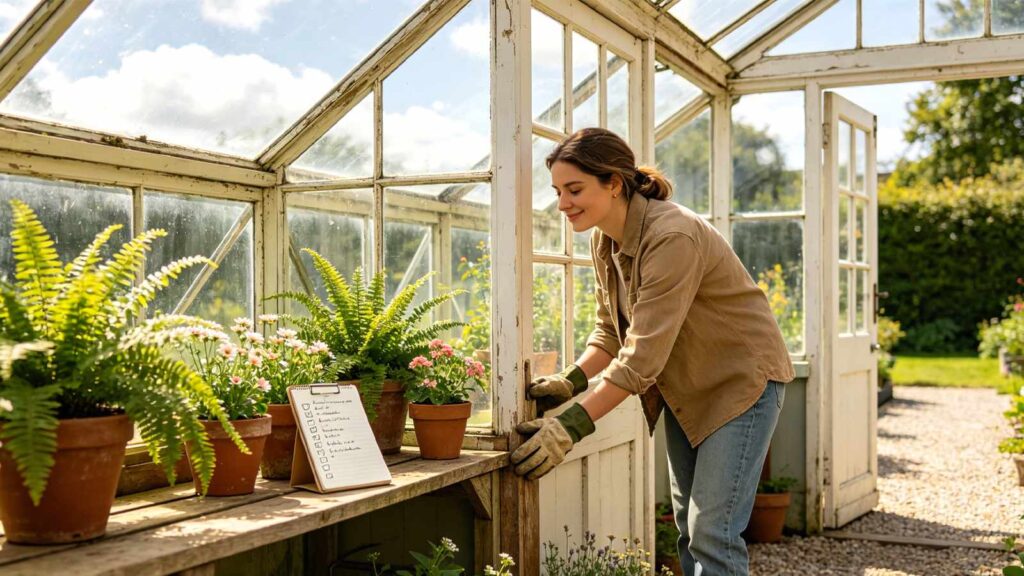
Print this list. Keep it in a plastic sleeve. Hang it inside your greenhouse door. Pick one month each year. Early spring is a good time. Or late autumn. Set a calendar reminder on your phone. Invite a friend to help. Two sets of eyes are better than one. Check each point slowly. Do not rush. After three years, you will know your greenhouse very well.
What happens if you skip a year
Nothing terrible happens right away. But small problems grow. A tiny crack becomes a broken pane. A small rot spot becomes a big repair. A stiff hinge damages a window frame. Regular checks cost almost nothing. Big repairs cost hundreds or thousands. Which do you prefer? The official maintenance list is your friend. Follow it once per year. Your Victorian greenhouse will thank you with healthy plants and beautiful looks.
Final friendly advice
Do not feel overwhelmed. Most checks take five minutes. The whole list takes two to three hours. Play some music while you work. Make it a yearly ritual. Enjoy being inside your greenhouse. Touch the wood. Look at the glass. Feel proud of your Victorian greenhouse. It is a special building. A little care goes a long way. Now go grab your gloves and start with number one. You have got this.