Chapter Four: The First Lesson · The Language of Light
The first lesson at the Primal Dome Academy began before dawn.
What woke Lia was not a bell, but a change in the glass—the curved wall of her room, frosted deep blue during the night, gradually softened into a pearly gray glow, like a giant clamshell slowly opening in the deep sea. Luminous text appeared on the inner surface:
“First Lesson: The Syntax of Light
Location: Morning Dew Hall
Bring: Empty hands and an open heart.”
Mara was already busy in the room, her miniature ecospheres performing their “dawn ritual”—tiny LEDs simulated sunrise, moss unfurled, and a sesame-seed-sized mechanical beetle began patrolling its preset route. Old Joseph stood by the window, eyes closed, sensing something.
“He’s reading the morning light spectrum,” Mara whispered. “An old Arborist habit. He says cloud layers at different heights act like filters, changing the ‘taste’ of light.”
Soft footsteps echoed in the corridor. The new students, like seeds drawn by invisible roots, flowed toward the heart of the academy. Lia joined them. Crossing a suspended glass walkway, she glanced down—the glowing fungus fields below were fading slowly, like an underground river of stars flowing into daylight.
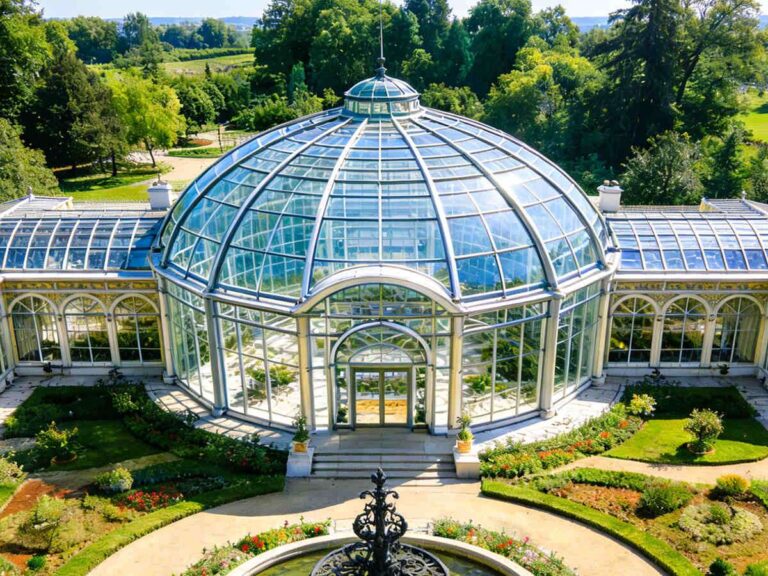
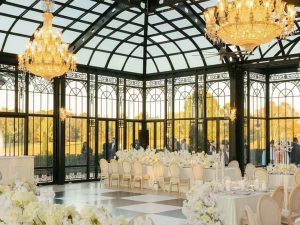
Morning Dew Hall was not a “room,” but a suspended ecosystem.
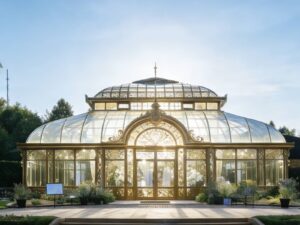
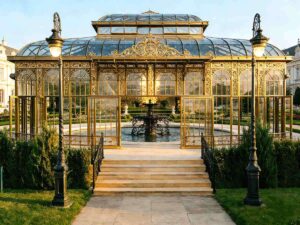
It resembled a huge teardrop-shaped glass bubble, hanging in the central atrium of the Primal Dome Academy. There was no floor, only broad, overlapping plant leaves forming natural platforms, their edges slightly curled to create natural railings. In the center, an inverted luminous tree hung from the “ceiling,” its roots embedded with thousands of crystal prisms that decomposed, recomposed, and scattered the external daylight.
The students found seats on the leaf platforms. Lia chose a heart-shaped schefflera leaf, its surface warm and leathery to the touch.
The instructor “grew” from the roots of the inverted tree.
She was a woman of ageless appearance, her robe woven from translucent optical fibers that flowed with gradient colors like morning light. Most striking were her hands—her fingers were unusually long, her skin so transparent that the delicate network of capillaries beneath was visible. And within those vessels, what flowed seemed not like blood, but liquid light.
“I am Selena Lightweaver,” her voice resonated not through the air, but softly within the consciousness of every student. “In the next ninety minutes, I will teach you the first word in speaking with light.”
She raised her right hand, palm facing the arched glass ceiling of the hall.
First gesture: palm open, fingers slightly curved.
“Invite.”
Instantly, the glass overhead transformed. Tiny hexagonal structures surfaced within the transparent material, adjusting their angles like a sunflower disk, scattering the direct dawn light into soft, misty beams—bright yet gentle, like forest light filtered through morning fog.
“Glass is not a wall,” Selena’s voice permeated like light, “but a translator for light. Ordinary glass in your world merely lets light pass, but every pane here is embedded with a ‘Light Syntax Matrix’—it understands gestures, plant needs, even the intentions of light.”
A boy in the front row couldn’t help asking, “The intentions… of light?”
“How light wishes to be used,” Selena smiled. “Direct light wants to ignite life, diffused light wants to nurture details, ultraviolet wants to sterilize, infrared wants to convey warmth. Our work is to understand their ‘will’ and arrange the most elegant paths for them.”
She made a second gesture: her right index and middle fingers joined, drawing a slow arc in the air.
“Guide.”
Where her fingertips passed, a visible stream of light appeared—not an illusion, but a path formed by dust particles precisely aligned by controlled light pressure. This stream, like an obedient creek, meandered through the hall and finally poured into a cluster of staghorn ferns growing in the shadows. The fern fronds unfurled visibly, dewdrops on their surfaces refracting tiny rainbows.
“Wow…” Mara sighed beside Lia.
“Now,” Selena withdrew her hand, “in groups of three, your leaf platforms will rise with practice areas.”
At the edge of Lia’s leaf, three small planting beds emerged: sun-loving tomato seedlings on the left, shade-preferring maidenhair fern on the right, and a blank control area in the middle. Above each hovered a palm-sized smart glass pane, awaiting commands.
“Basic task: use gestures to make your small glass understand—the tomatoes need abundant but not excessive light; the ferns need soft, evenly diffused light. Begin.”
The hall immediately filled with chaotic gestures.
The boy to Lia’s left pushed his palms forcefully at the glass, as if trying to shove light onto the tomatoes. The glass overreacted, shooting a harsh beam that nearly scorched the seedlings. The girl on her right cautiously “stroked” the air, but the light was so faint the ferns began to wilt.
Lia didn’t act immediately.
She closed her eyes, recalling mornings on the farm: the eastern slopes were bathed in sunlight first, but the western slope where her father grew shade-tolerant berries always waited until sunlight crossed the ridge and was shattered into dappled patterns by the old oak tree. Light was never “evenly distributed”; it danced a precise ballet in collaboration with the land, trees, and structures.
She opened her eyes and extended her hands.
With her left hand, she made a “cradling” gesture toward the tomato bed—not pushing, but lifting from below. She imagined it as the rising sun, needing support, not pressure.
The smart glass above understood. A warm golden beam descended, its edges softly blurred, its intensity automatically adjusting to the height of the seedlings.
With her right hand, she made an “embracing” gesture toward the fern bed—arms slowly closing in front of her, as if gathering invisible mist.
The moment she completed this gesture, something unexpected happened.
The small glass pane above Lia’s planting bed vibrated at a high frequency, emitting a crisp, chime-like sound. Instead of projecting light onto the ferns, it fogged into an opalescent white and began to seep light uniformly across the entire area.
Not a beam, but a mist of light.
A diffused glow, soft as moonlight yet full-spectrum, filled the fern space like a warm haze. Every frond was evenly wrapped, its spore capsules clearly visible, yet without a single shadow. This light even flowed into the adjacent tomato area, blending naturally with the direct beam to form a gradient of illumination.
The hall fell silent.
Selena Lightweaver had appeared soundlessly beside Lia’s leaf platform. The instructor’s translucent fingers gently probed the “light mist,” the capillary networks within glowing with complex data streams.
“The Law of Diffused Illumination…” Selena’s voice held rare surprise. “This is an effect advanced glass-coating technology has pursued for half a century—using nanostructured surfaces to create theoretically perfect, uniform light distribution through countless micro-refractions.”
She studied Lia. “You haven’t studied light scattering principles?”
Lia shook her head. “I just… didn’t want the ferns to feel they lived ‘in the shadows.’ I wanted them to feel their space was itself a complete form of light.”
Selena fell silent for a few seconds.
“Do you hear?” the instructor addressed all the students. “This is not technique; it is philosophy. She empathizes with the plants, rather than manipulating light. Technology can produce perfectly diffusing glass, but only by understanding that ‘plants in shadows also have a right to enjoy light’ would one think to use it this way.”
She raised Lia’s right hand for all to see. “Note the angle of her wrist—23 degrees, the optimal incident angle for the academy’s glass array. The curvature of her palm matches the attenuation curve of light passing through fogged glass. She innately understands the language of light-matter interaction.”
Mara whispered excitedly in Lia’s ear, “I knew your spiral was special!”
After the lesson, while other students still struggled to refine their gestures, Selena asked Lia to stay.
“Your assignment,” the instructor said, tapping the air. A glowing crystal leaf floated into Lia’s palm. “is not to practice gestures, but this.”
Complex star charts, mathematical formulas, and plant diagrams surfaced on the leaf.
“The academy has a research station in the Arctic Circle. During the polar day, it needs a shared lighting system for twenty-four moss species with different light requirements. I want you to design a gesture-based scheme to replace the current mechanical shading system within a week.” Selena’s eyes flashed with challenge. “Use your ’embracing light mist’ concept to sustain a miniature forest.”
Lia looked down at the rotating polar images within the crystal leaf. “By myself?”
“A Light Speaker is never alone,” Selena pointed to Lia’s hands. “You carry your great-grandmother’s gift, the memories of your farm, and all the secrets the plants are willing to share. Now, go make friends with the light.”
On her way back to the dorm, Lia passed the outer corridor of Morning Dew Hall. Through the glass wall, she saw Instructor Selena standing alone under the inverted tree. The instructor made a simple gesture—not the precise movements from the lesson, but a gentle combing through the air, as if stroking a pet.
The light strands tenderly twined around her fingers, as if responding.
Lia looked down at her own hands. The spiral patterns on her palms glowed faintly in the academy’s light. She suddenly realized: perhaps she had been learning this language her whole life—watching dawn shadows shift across the farm, seeking coolness under the noon shade, seeing how dusk gilded the apples.
Light was never an enemy or a tool.
Light was the rhythm of the land breathing, the pulse of changing seasons, the oldest dialogue between life and herself.
That evening, she began sketching light schemes for the polar moss on her room’s smart glass wall. She didn’t start with diagrams, but first wrote a line:
“Suppose you are moss—
Under the endless daylight, what kind of light would you want?
Not ‘endure,’ but ‘desire.'”
The wall remained silent for a moment, then began generating hundreds of light distribution simulations. Watching those flowing patterns of light and shadow, Lia felt, for the first time, that a two-way conversation had begun between her and the light.