Menu


Glass Greenhouse Choices: Standalone vs. Attached Sunroom Foundations
Explore the key differences between standalone and attached sunrooms. Learn which glass greenhouse suits your space and lifestyle in our friendly guide.
Glass Greenhouse Choices: Understanding Standalone and Attached Sunroom Foundations
Welcome to our guide on sunroom fundamentals. If you are dreaming of a glass greenhouse addition, you have a primary choice to make. You must decide between a standalone structure and an attached sunroom. This decision impacts more than just appearance. The core structural foundation of each type is fundamentally different. Learning these differences is the first step. Our learn-to sunroom guide will help you understand these key distinctions. We will explain everything in clear, simple terms. Let us explore what sets these two popular options apart from the ground up.
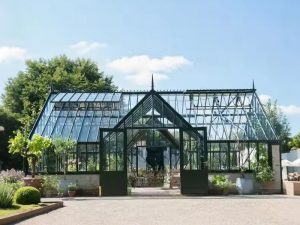
A standalone glass greenhouse is a fully independent building. It is a separate entity from your main home. This independence defines its entire structural approach. The foundation must be self-sufficient. It bears the complete load of the structure on its own. Engineers design it to handle all forces independently. Wind, snow, and weight pressures are managed in isolation. The foundation is typically a perimeter-based system. It often uses deep footings to prevent frost heave. The structure requires its own utilities and pathways. This isolation offers great siting flexibility in your yard.
An attached sunroom, in contrast, is a seamless extension. It connects directly to your existing house. This connection is its defining structural characteristic. The foundation here has a dual role. One side integrates with your home’s existing foundation. The other side is built anew on open ground. This creates a hybrid support system. The design must ensure a perfect marriage between old and new materials. The connection point to your home is critically important. It must be sealed and reinforced with great care. This attachment fundamentally changes the engineering requirements.
The site preparation phase highlights an early difference. For a detached greenhouse, the entire footprint is new construction. The ground must be leveled and assessed away from the house. Soil testing is crucial for determining the footing depth. There are no existing structures to consider during excavation. This can simplify initial access for heavy machinery. The location is chosen based on sun exposure and garden layout. For an attached sunroom, work happens directly beside your home. Excavation must avoid disturbing the home’s existing foundation. Utility lines from the house often run through this area. Extra caution is required to prevent damage. The proximity to the house can sometimes limit equipment use.
Foundation design philosophies diverge significantly. A standalone greenhouse foundation acts as a closed loop. It is a complete rectangle or square of support. This loop evenly distributes the building’s weight. The design focuses on preventing differential settlement. All sides settle at the same rate in ideal conditions. An attached sunroom foundation is not a closed loop. It is more like a “U” shape or three-sided box. The fourth side is your home’s sturdy wall. This means settlement dynamics are more complex. The new foundation and the old foundation may settle differently over time. Expansion joints and specialized footings are used to manage this.
Load-bearing dynamics present another key contrast. The walls of a detached glass greenhouse carry the roof load uniformly. All four walls share the structural burden equally. The roof weight transfers down through the columns or frames. It then travels directly into the independent foundation. An attached structure shares its load in a lopsided manner. The shared wall with your home becomes a primary support. This wall bears a significant portion of the roof’s weight. The other three walls carry the remaining load. This requires careful calculation to ensure your home’s wall can handle the new stress.
Thermal and moisture considerations are also structured differently. A standalone learn-to sunroom project must consider insulation on all sides. Heat loss can occur in every direction. The floor, walls, and roof all need thermal breaks. Moisture barriers must surround the entire foundation. An attached sunroom has one inherently insulated side. Your home’s wall provides a barrier. However, the connection point becomes a critical thermal bridge. Preventing heat transfer and moisture infiltration at this joint is paramount. Special flashing and sealing techniques are always employed here.
The choice of materials may see some overlap. Both types can use concrete footings and slabs. The engineering specifications will differ. A detached greenhouse might use a monolithic slab for simplicity. An attached addition often requires a more segmented approach. Frost-protected shallow foundations are common for both. The integration detail for the attached model is more complex. It involves tie-ins to the existing home’s waterproofing layers. This integration is vital for long-term performance and avoiding leaks.
Planning permissions and codes view these structures through different lenses. A detached glass greenhouse is often classified as an accessory building. Setback requirements from property lines are usually strict. Height restrictions may also apply to keep it subordinate to the main house. An attached sunroom is seen as a home addition. It must comply with residential building codes for habitable space. Egress requirements and energy codes become more stringent. The inspection process will focus heavily on the safe, legal integration with your dwelling.
From a lifestyle perspective, the foundation choice influences use. A detached structure offers a true retreat. It provides psychological separation from the main living area. It becomes a dedicated garden sanctuary or hobby space. An attached sunroom promotes seamless living. It encourages flow between indoor and outdoor life. It serves as a bright, cheerful extension of your kitchen or living room. Your daily habits and intended use should guide this fundamental choice.
Budget implications stem from these structural differences. A standalone greenhouse might seem simpler. It does not require complex integration work. However, it needs a complete, independent foundation and utilities. Costs for bringing power and water across the yard add up. An attached sunroom saves on one wall and shared utilities. The complex integration work and higher-end finishes often balance the cost. Both represent significant investments in your property and quality of life.
Long-term maintenance pathways are also distinct. A standalone building settles uniformly. You monitor for cracks or shifts in its independent foundation. Maintenance is performed on a separate entity. An attached sunroom requires you to watch the seam. The connection line between the new room and the old house is the priority. Caulking and flashing at this junction may need periodic renewal. Drainage must always steer water away from this critical intersection.
In conclusion, the choice between a standalone and attached glass greenhouse is profound. It starts from the ground up with a completely different foundation philosophy. One is an independent island of glass and light. The other is a woven extension of your home’s fabric. We hope this learn-to sunroom discussion has illuminated the core structural differences. Understanding these basics empowers you to make the right choice. You can now plan for a sunroom that is not only beautiful but also built on a solid, suitable foundation for your dreams.
Related_products


Why Choose Us?
1
As the first manufacturer in China to introduce the Victorian conservatory design from Europe, we have 36 years of production experience since 1988, and our products are distributed in 68 countries.
2
We have a professional team of 8 conservatory design engineers and 60 production workers. We are equipped with 2 hot-dip galvanizing machines, 2 steel shot blasting machines, and 1 spray line.
3
Our professional design team can provide theoretical calculation data support for wind pressure resistance, earthquake resistance, and snow resistance of large-scale steel structure conservatories.
4
Strict quality control. 8 inspection stages: raw material inspection, cutting and blanking size inspection, welding quality inspection, hot-dip galvanizing quality inspection, spray quality inspection, assembly quality inspection, and packaging quality inspection. Ensuring smooth assembly of the products, no rust, no leakage, and compliance with customer national standards.
5
We cooperate with many well-known architectural design companies worldwide.
6
Customized services. We can customize according to customer designs and dimensions. We also provide supporting facilities such as electric sunshades and air conditioners.
7
We offer installation dispatch services, inspection services, and free replacement of parts. We also present high-value exquisite gifts.
8
Video factory tour. You can view the entire production process.
Ready to Bring Your Greenhouse to Life?
Have questions about Greenhouse solutions? Leave a message below.
Your information will be kept confidential.
Call us: +86 138 3370 5565 • Email: admin@hengshengcasting.com