Base Wall Height and Material Selection
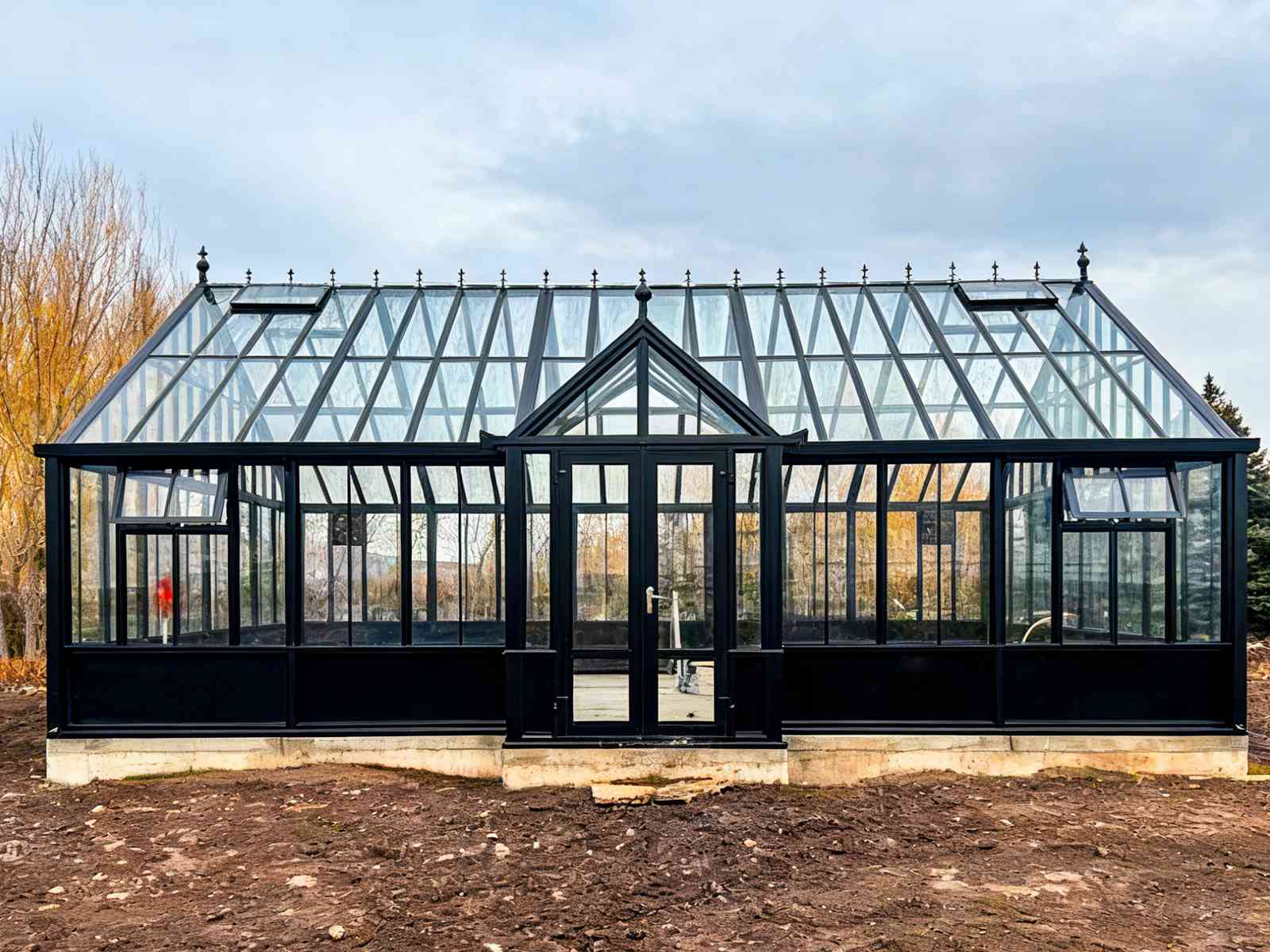
The solid base wall typically ranges from forty to one hundred centimeters in height. A lower wall around forty to sixty centimeters allows more glass area for light-loving plants, while a higher wall between sixty and one hundred centimeters provides better insulation, more privacy, and extra safety for homes with children or pets. For the base material, brick offers a classic look and good thermal mass that matches most homes. Stone provides natural beauty and exceptional durability but comes at a higher cost. Concrete block with rendering is the most budget-friendly option and can be painted or plastered to suit your style.
Glazing and Frame Options
The upper glazing can be tempered glass, which offers the best light transmission and scratch resistance but is heavier. Twin-wall or multi-wall polycarbonate is lighter, provides better insulation, is less fragile, and costs less. For four-season use, double-glazed units are best as they reduce condensation significantly. The frame material also matters. Aluminum is rust-proof and low maintenance with slim profiles that maximize glass area. Wood offers natural beauty and better insulation but requires yearly treatment. Steel is the strongest option, ideal for large spans, though it is heavy and can rust if not properly coated.
Ventilation and Drainage
Proper ventilation is mandatory for temperature control. Your sunroom should include at least two to three roof vents, and automatic openers using wax-piston or electric mechanisms are highly recommended. Adding side louver windows near the base wall helps create cross-ventilation. For drainage, the base wall must sit on a concrete foundation with a damp-proof course to prevent rising damp and mold. Including a floor drain is wise if you water plants heavily inside, and choosing a gravel or tile floor makes cleaning easier than wood.
Insulation for Year-Round Use
To use your sunroom in all four seasons, add rigid foam insulation behind the inner face of the brick wall. Using thermal break aluminum frames reduces heat loss significantly. In cold climates, double glazing on all glass panels is essential. Proper insulation keeps your plants warm in winter and prevents overheating in summer.
Budget and Common Mistakes
The total cost of a base wall sunroom typically breaks down with the foundation and base wall taking twenty-five to thirty percent, the frame costing twenty to twenty-five percent, glazing another twenty to twenty-five percent, the roof and vents taking ten to fifteen percent, and installation labor accounting for the remaining fifteen to twenty percent. Avoid common mistakes such as making the base wall too low, which loses insulation benefits, forgetting roof vents, which turns your sunroom into an oven, skipping the damp-proof course, which causes rising damp and mold, or using single-pane glass in cold climates, which leads to condensation and heat loss.
Final Considerations Before Buying
Before purchasing your base wall sunroom, check local building permits, confirm that the base wall height matches your needs, choose glazing that suits your climate, ensure roof vents are included and preferably automatic, plan for a damp-proof course, select your floor material from options like tile, gravel, or concrete, and add insulation for four-season use. Taking these steps will give you a durable, bright, and comfortable space that functions as both a greenhouse and a living area for years to come.