The Complete Guide to Purchasing Your Victorian Gothic Greenhouse
Acquiring a Victorian Gothic Greenhouse is distinct from purchasing a standard aluminum polytunnel. You are not just buying garden infrastructure; you are commissioning a centerpiece for your landscape. This guide is designed to walk you through the nuances of selecting, customizing, and installing a structure that balances the romance of nineteenth-century architecture with the rigor of twenty-first-century horticultural technology.
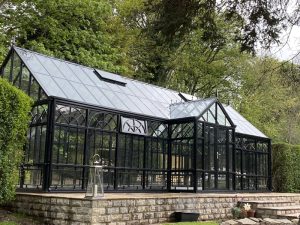
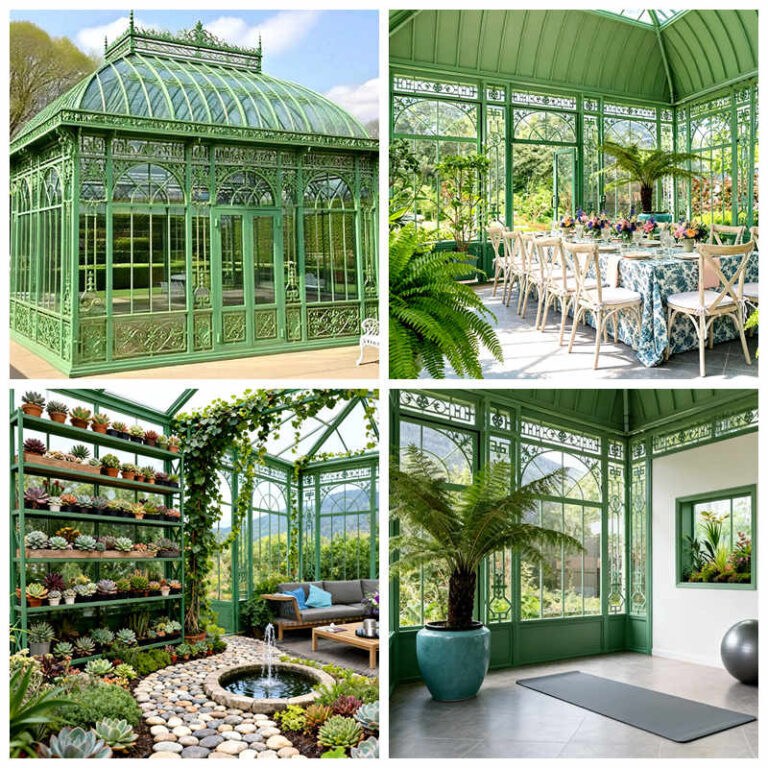
Before reviewing any blueprints, it is essential to define the primary function of your greenhouse, as this will dictate its size and internal fittings. If your goal is to create an ornamental conservatory that connects the home to the garden, your focus will be on aesthetics. This requires a structure with minimal internal obstructions, designed for seating areas and the display of potted specimen plants. Conversely, for the serious botanist focused on propagation and cultivation, functionality becomes paramount. You will need robust benching, ample ventilation, and staged heating zones, all housed within the decorative Gothic shell. Alternatively, you might envision the structure itself as the specimen, a “garden ruin” placed in a wilder part of the landscape. In this case, the frame can be treated for a weathered look to appear as a reclaimed architectural folly discovered within the landscape.
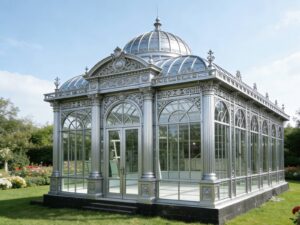
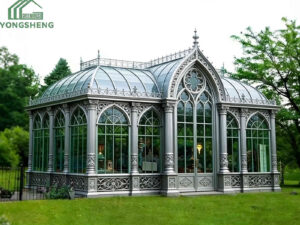
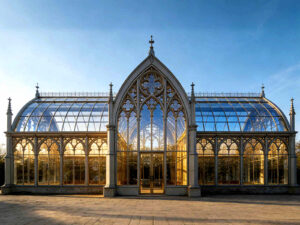
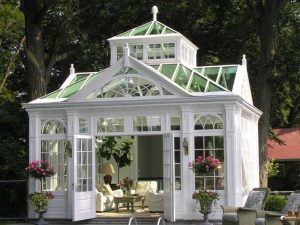
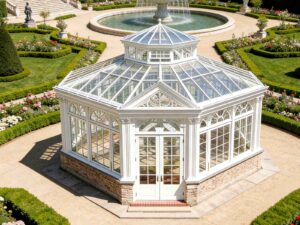
To achieve an authentic Victorian Gothic appearance, your solution must incorporate specific architectural elements that define the style. The pointed arch, often referred to as the lancet window, is non-negotiable. Unlike the rounded curves of the Georgian era, the Gothic aesthetic relies on this dramatic vertical peak, which should be evident in the ridge lines and window headers. The glazing bars themselves deserve close attention, as authenticity requires slim-profile bars that mimic the elegance of wrought iron. Many high-end solutions feature astragal bars that create the illusion of smaller, diamond-shaped panes, even when modern, large sheets of glass are used for insulation. Finally, the roofline should not be plain. A true Gothic greenhouse features decorative ridge cresting, often called spine cresting, and finials at the peaks. These details draw the eye upward, emphasizing the verticality that makes the style so distinctive.
Regarding the materials, the choice often comes down to a balance between historical authenticity and practical maintenance. For the purist seeking absolute accuracy, rolled steel or traditional iron allows for thinner, more elegant bars that closely mimic the originals. However, this choice requires significant ongoing maintenance, including regular painting to prevent rust, and it necessitates a reinforced concrete base to support the considerable weight. For the pragmatic collector, modern powder-coated aluminum is superior. It allows for thermal break technology that prevents heat loss, and the material is completely rust-proof. Available in specialized finishes such as Gothic matte black or sage green, it mimics the look of aged iron perfectly without the associated upkeep. For most serious horticulturists, this is the recommended solution.
The choice of glazing impacts both the visual aesthetic and the internal climate of the structure. Clear float glass maximizes light transmission and is best suited for sun-loving plants like citrus or cacti displayed within a Gothic frame. However, for a space dedicated to ferns and shade-loving specimens, diffused glass is the superior option. It scatters light to eliminate harsh shadows that can burn delicate leaves, while still allowing the external framework to cast its dramatic, intricate shadows across the interior floor. For a period-accurate appearance, one might also consider textured or cathedral glass, which distorts the view slightly to add privacy and a sense of mystery.
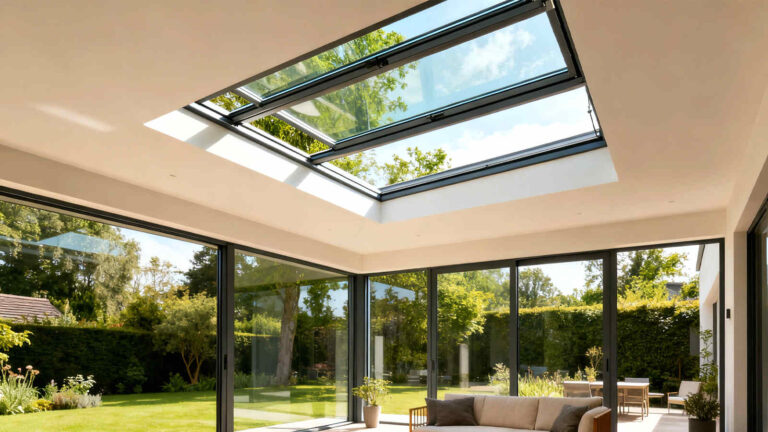
A Gothic greenhouse, with its steep roof and potential for heat retention, requires a sophisticated ventilation strategy. Automatic, temperature-controlled ridge vents should be positioned along the highest peak of the roof to release rising hot air effectively. These should be paired with louvered side vents placed low on the walls to draw cool air inward. This combination of low inlets and high outlets creates a natural chimney effect that is both efficient and perfectly suited to the verticality of a Gothic structure. When considering shading, internal blinds are often more aesthetically pleasing than external shade cloth in a heritage setting; woven wooden blinds can complement the antique feel beautifully.
The greenhouse itself requires a solid foundation and does not sit directly on the earth. A low kickboard wall made of brick or stone, standing approximately two to three feet high, is historically accurate for the Victorian Gothic style. This feature grounds the structure, provides thermal mass to store heat during the day and release it at night, and protects the lower glazing from ground moisture and garden maintenance equipment. Choosing reclaimed brick or local stone can help the structure harmonize with the existing property. Inside the greenhouse, one might consider flagstone flooring for a conservatory feel intended for entertaining, or gravel for excellent drainage in a working propagation environment.
Finally, customization and professional installation complete the process. While black or dark green are classic color choices for the frame, a deep burgundy or Oxford blue can make the architectural tracery pop vividly against the glass. It is also wise to specify high-capacity, period-style guttering with decorative downspout collectors to manage the significant water runoff from the glass roof. Due to the considerable height and visual impact of these structures, they may require planning permission depending on your location. A professional site survey is recommended to ensure the location receives adequate light while being protected from prevailing winds. Professional installation is mandatory, as the weight of the glass and the complexity of the pointed arches requires expertise to ensure the structure is perfectly square and watertight.
Purchasing a Victorian Gothic Greenhouse is ultimately a journey of curation. By balancing authentic architectural details with modern thermal materials and professional guidance, you create a space that is both a visual masterpiece and a functional powerhouse for plant growth, welcoming you to a tradition of distinguished gardening.