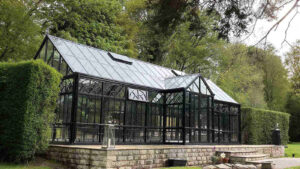
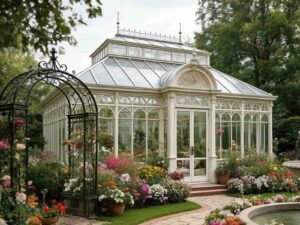
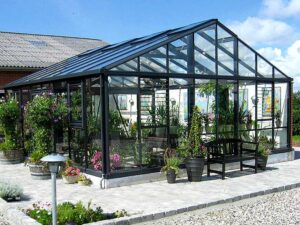
Does your glass greenhouse underperform at night? You’ve optimized sunlight, but what about the other half of the day? Many growers overlook a subtle yet significant factor: moonlight and architectural orientation. The alignment of your structure isn’t just about capturing the sun’s rays. It’s about harmonizing with the entire sky’s rhythm, including the moon’s gentle glow. This often-forgotten light source can influence plant processes like germination and rest cycles. A scientifically planned glass greenhouse orientation considers both celestial bodies. This approach creates a more natural environment. It can lead to robust plant health and improved yield. Let’s explore the fascinating relationship between moonlight angles and your building’s placement.
Understanding Lunar Light
Moonlight is, of course, reflected sunlight. Its spectral quality differs, with a softer intensity. While it doesn’t power photosynthesis like the sun, it acts as an environmental signal. Specific moon phases provide varying light levels. The full moon offers the greatest illuminance. This subtle light can penetrate a well-oriented glass greenhouse effectively. It influences nocturnal processes such as nutrient uptake and certain growth hormones. Studies suggest it can affect seed germination timing for some species. Ignoring this factor means missing a holistic growth tool.
The Science of Orientation
Building orientation is crucial for light capture. For sunlight, a south-facing primary wall is standard in the Northern Hemisphere. This maximizes daily solar exposure. However, incorporating moonlight analysis requires a broader view. The moon’s path across the sky is more complex than the sun’s. It shifts significantly over its 18.6-year cycle. An optimal glass greenhouse placement considers both paths. The goal is to avoid structural elements casting long shadows under a bright moon. East-west orientations often facilitate better lunar light penetration during key phases. This is especially true for the rising full moon.
Moon Angles and Roof Design
The angle of your greenhouse roof should be analyzed for lunar gain. Moonlight strikes at different angles throughout the year. A steep roof pitch may trap summer moonlight. A shallow pitch might better capture the low winter moon. The calculation involves your geographic latitude and the moon’s declination. Professional software can model this interaction. The right design allows moonlight to wash over plants evenly. It prevents deep shadows inside the structure at night. This creates a stable microclimate. Plants experience less stress with consistent environmental signals.
Seasonal Lunar Considerations
The moon’s impact changes with seasons. Summer often brings a lower lunar path. Winter sees the moon higher in the sky for many latitudes. Your greenhouse orientation must account for these shifts. A structure designed for winter moonlight may differ from a summer-centric one. The growing cycle of your plants dictates the priority. For year-round cultivation, a balanced approach is key. Sidewall placement and glazing clarity become critical. They allow low-angle lunar light to enter during pivotal growth stages.
Practical Alignment Steps
Start by observing moonrise and moonset points on your property. Chart these over several months. Identify the most consistent path. Position your main glazing to face this lunar corridor. Avoid obstructions like trees or buildings. The transparent wall should have a clear view of the night sky. Remember, moonlight is diffuse. A broad opening is better than a narrow one. Secondary glazing can be positioned for solar needs. This dual-axis alignment marries both light sources seamlessly.
Microclimate Synergy
Proper orientation manages temperature as well. Moonlight exposure influences nocturnal cooling rates. A well-aligned greenhouse avoids sudden temperature drops. It promotes steady humidity levels. This synergy between light and climate reduces plant shock. It fosters stronger cellular development. Fans and vents can be calibrated to complement this natural flow. The result is a resilient ecosystem. Plants become less dependent on artificial interventions.
Data and Technology
Modern technology aids this precision. Light sensors can measure lunar illuminance. Digital compasses and inclinometers help during construction. Simple tools like these ensure accurate alignment. Data loggers track nighttime light levels over a season. This information validates your design choices. It also helps refine future projects. Embracing technology makes lunar orientation accessible. It transforms an ancient concept into a modern best practice.
Long-Term Benefits
A moon-conscious glass greenhouse offers distinct advantages. Plants often exhibit more natural rhythms. Nutrient density in fruits and leaves can improve. Pest pressures may decrease in a balanced environment. The need for supplemental lighting might be reduced. This saves energy and operational costs. Ultimately, you work with nature’s complete cycle. You create a sanctuary that respects both day and night.
Conclusion
Your greenhouse should thrive under the sun and the moon. Thoughtful orientation is the key. It unlocks the full potential of celestial gardening. By considering moonlight angles, you build more than a structure. You craft a living system. Start with a clear night of observation. Let the moon guide your planning. Your plants will thank you with vibrant growth. Embrace the entire sky, and watch your garden flourish.