The wind of early March still carried the tail end of winter as it swept over the slumbering apple orchard on the hillside. When seventeen-year-old Lia pushed open the creaking wooden door, dust danced in the slanted sunlight like fragments of time, startled into motion.
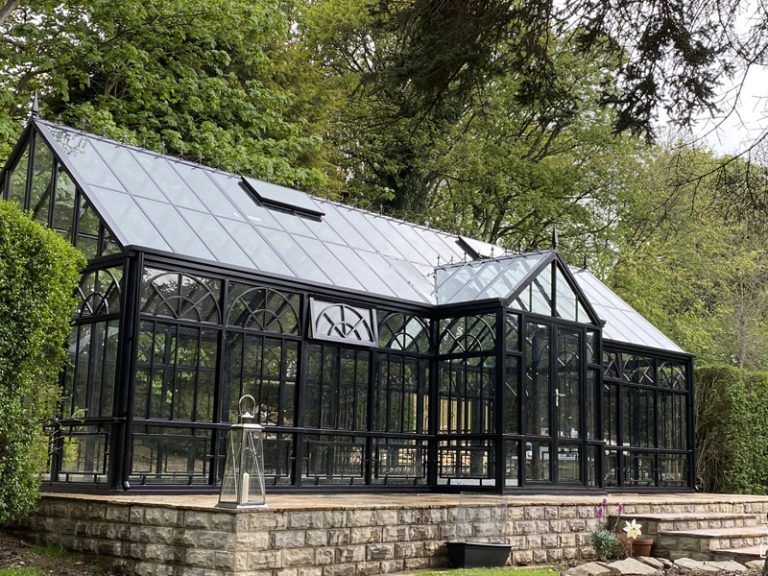
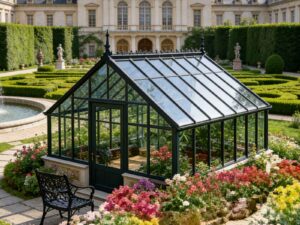
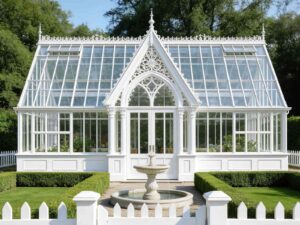
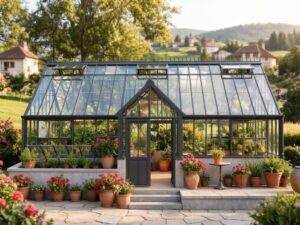
This was her great-grandmother’s glass greenhouse, abandoned for a decade.
Lia’s boots crunched on broken terracotta shards. Like every year, she was supposed to just clean up a little and leave—her father had said restoring this old place cost as much as building three new polytunnels. But this year was different. This was her last spring before finishing high school, and some goodbyes needed to be more deliberate.
“Great-grandma, I’m here,” she whispered, her fingers brushing thick dust from the workbench.
The bench was oak, its edges worn smooth by time. Lia remembered being a child here, her great-grandmother teaching her to identify seeds—tomato seeds like fuzzy moths, carrot seeds smelling of fennel, and apple seeds… each holding a possible universe.
She began clearing the drawers, mostly empty. But in the very bottom, stuck one, her fingertips touched a different temperature.
It was a hidden compartment beneath the drawer’s base, its edge marked by an almost invisible seam. Using her great-grandmother’s brass trowel, Lia gently pried it open. Inside were no jewels, no letters, only a parchment scroll tied with a deep green silk ribbon.
The moment she touched the scroll, the light in the room changed.
The three o’clock sun poured through the greenhouse’s ancient roof glass—uneven, hand-blown panes with characteristic waves. As light filtered through these ripples and gathered on the scroll, the parchment began to glow with a soft, cerulean light, like moss in a deep summer forest or the darkest sky before dawn.
Lia untied the ribbon. The scroll unfurled on its own.
The words upon it weren’t written—they were growing.
The ink, like tiny rootlets, slowly stretched, branched, and spread across the page, forming characters she’d never seen yet somehow knew. They shifted, arranging themselves into an invitation:
“To the one who hears the heartbeat of a seed:
On the night the first apple blossom opens,
Bring a seed you have saved with your own hands
To where the glass reflects the full moon.
— Verwel Greenhouse College”
Beneath the words, a four-leaf clover drifted down.
Lia caught it. The leaves quivered in her palm—not from any breeze, but as if a faint pulse flowed through its veins. Looking closer, she saw each heart-shaped leaf wasn’t green, but had a crystalline, glass-like quality, with pinpricks of light moving inside, like a captured piece of starry sky.
“This can’t be…” she murmured.
Outside, the apple orchard was still a tangle of bare, brown branches, at least three weeks from blooming. But when she looked back at the scroll, a final line was appearing:
“The first sign has already occurred:
In the clay pot on the third shelf behind you to your left,
The hyacinth bulb decided two minutes ago to bloom blue.”
Lia whirled around.
In the forgotten pot, a dried hyacinth bulb lay in the soil. She approached carefully, kneeling—a tiny crack had split its top, and a stubborn hint of blue was peeking from the darkness.
Not a bud.
The color itself.
She touched it lightly. A faint vibration hummed against her fingertip, like the beat of a hummingbird’s wing. In that moment, Lia suddenly understood her lifelong “strange feelings” might not have been imagination:
At five, she’d insisted on moving a tomato seedling east; it bore the sweetest fruit.
At ten, she moved all the potted plants inside before a storm, saying “they were having nightmares.”
Last spring, she heard a tree in the orchard “crying”; the next day it was diagnosed with root rot.
Her mother called it an overactive imagination.
Her father said farm children just knew these things.
Only her great-grandmother would pat her head and say, “My little Lia, you speak the same language as the land.”
The scroll grew warm in her hands. The text shifted again, revealing new instructions:
“Preparations:
1. Choose a seed you truly know (It knows you, and you know it.)
2. Cleanse your hands with moonlight (Begin three nights before the full moon.)
3. Practice seeing the duality of glass—it is both barrier and passage.”
This last line made Lia look up.
Beyond the glass walls, the hill sloped down, and the distant town lights began to twinkle like stars. The glass itself, in the gathering dusk, had become a misty mirror reflecting her own face—a farm girl with dusty hair and wide eyes.
But when she blinked, the reflection seemed to change.
For a split second, she didn’t see herself, but another figure: a woman in strange, flowing robes, standing under a vast glass dome surrounded by tiers of glowing plants. The woman turned her head and smiled at Lia—a smile Lia recognized.
Her great-grandmother’s smile from her wedding photo.
The vision vanished.
Lia took a deep breath, carefully rerolled the scroll with the four-leaf clover inside, and walked to the hyacinth. “You saw it too, didn’t you?” she whispered.
The bulb didn’t answer. But from within its crack, another speck of blue emerged.
That evening, Lia didn’t tell her parents about the scroll. She simply took a small pinewood box from her nightstand—inside were seeds she’d saved over the years: from the first tomato plant she tended alone, from the apple tree she’d helped nurse back to health, from her great-grandmother’s last season of roses…
Which one should she choose?
Moonlight streamed through the window, falling on the seeds. Lia suddenly understood: she didn’t need to decide now. Before the night of the apple blossom, she had time to truly “hear” their heartbeats.
Outside, the apple orchard stood silent under the moon.
But Lia knew something had changed. Within those bare branches, flower buds were dreaming of blooming in their sleep. And she herself felt as if she were just waking from a long slumber.
She picked up her great-grandmother’s copper watering can. The faint vine patterns etched on its base, in the moonlight, looked just like the script on the scroll.
“Verwel Greenhouse College…” she whispered the name like an incantation.
And on the distant hill, this year’s first flower bud quietly swelled in the dark, ready for a spring that was destined to be different.